
Bilhah
Bilhah, Rachel's maidservant, bore Jacob two sons, Dan and Naphtali, who became ancestors of Israelite tribes.
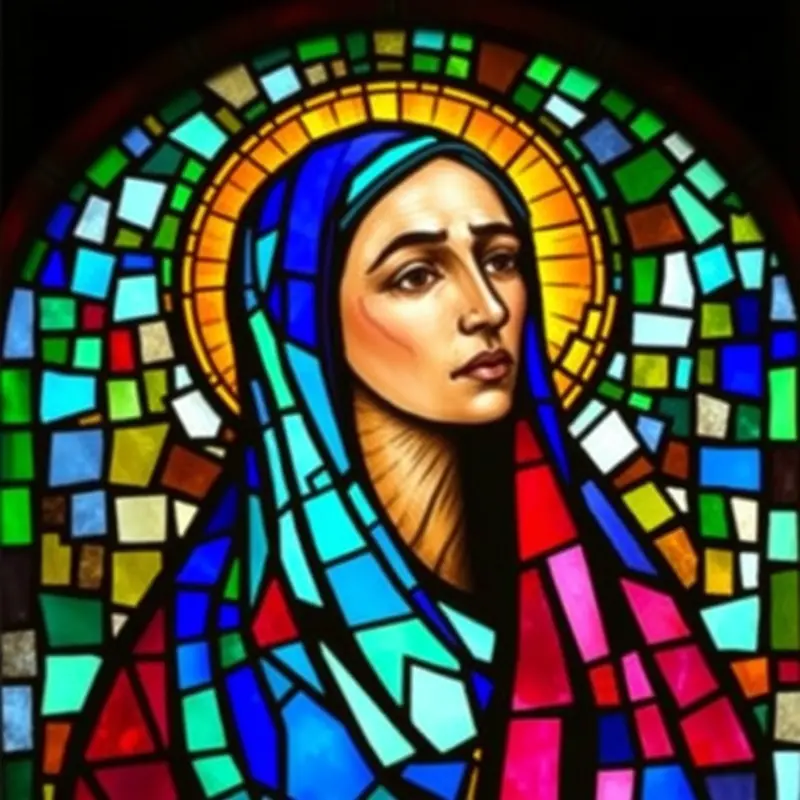
Biography
Bilhah was the personal maidservant given to Rachel by her father Laban upon her marriage to Jacob (Genesis 29:29). When Rachel found herself unable to conceive while her sister Leah bore children, she gave Bilhah to Jacob as a concubine so that she might have children "through her" according to the cultural customs of the ancient Near East (Genesis 30:3-8). Bilhah bore Jacob two sons: Dan and Naphtali, whose births were marked by Rachel's exclamations of vindication and wrestling. Both sons became patriarchs of Israelite tribes. Bilhah's story takes a tragic turn in Genesis 35:22, when Reuben, Jacob's eldest son, lay with her, an act that cost Reuben his birthright and revealed the deep dysfunction within Jacob's household.
Significance
Bilhah's life illuminates the complex, often painful social structures of the patriarchal world, where women of lower status could be given and used as instruments in family politics. Yet within God's sovereign purposes, Bilhah's sons became two of the twelve tribes of Israel, a reminder that God's redemptive plan advances through broken, imperfect human circumstances. The tribe of Dan, though later associated with idolatry (Judges 18), and Naphtali, whose territory would be blessed in Isaiah's prophecy (Isaiah 9:1) fulfilled in Christ's Galilean ministry (Matthew 4:15), both carry theological weight. Bilhah's story challenges readers to recognize God's faithfulness even amid the exploitation and suffering of marginalized individuals.
Verse Appearances (10)
References
- Orr, J. (ed.) (1915) The International Standard Bible Encyclopedia. Chicago: Howard-Severance Company. [Public Domain]
- Tyndale House, Cambridge (n.d.) Translators Individualised Proper Names with all References (TIPNR). STEPBible. Available at: https://www.stepbible.org. [CC BY 4.0]
- Wikidata contributors (n.d.) Wikidata. Available at: https://www.wikidata.org. [CC0]
- Church of England (1769) The Holy Bible, Authorized (King James) Version. [Public Domain]